
Today, our class was based on the app Proloquo. This has become the most accessible and easiest to use in terms of aided language devices. It is user friendly in that it doesn't take much of a learning curve to start accessing the app material. It is easy to navigate. It gives an immediate voice to students, presumes competence, gives power, and allows the person to show what they know. It is a game changer for students who traditionally would not be given any opportunity to participate.

Watching the various videos on aided language and modelling were a great starting off point for me as I admittedly, have little to no experience with teaching a child how to use an aided language system. The main idea is input and stimulation, watching others use pictures during motivating activities and the use of these picture symbols can be a way for people to speak with pictures. The pictures become the language paired with speech. Modelling is the biggest part of the initiation of such a program so hearing that we should be commenting on everything we are doing and even the body language that the child is using was eye opening.

Things I will implement with P2G/Main takeaways:
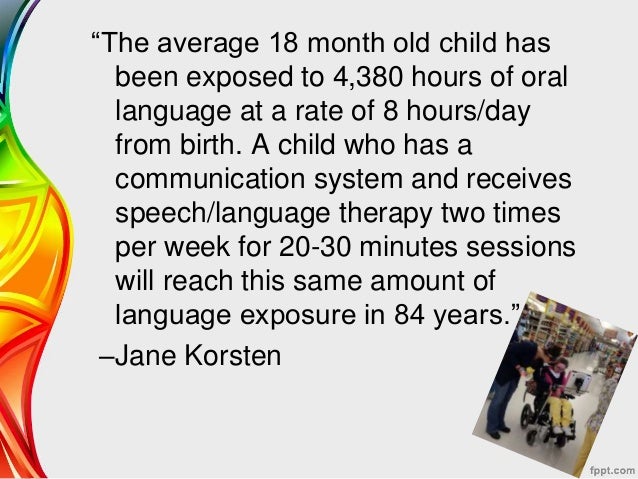
-We must aim to use aided language systems at least 20 times per hour. When we were asked to think about how verbal kids learn to talk, and then presented with the idea in the quote from Jane Korsten, it all started coming together for me.
-Creating folders for different activities, like for the story "Brown Bear". This would be such a great activity to engage the student in conversation about something they have read or listened to. I think it would be such a great way to deliver a comprehension discussion about a story or to pick specific questions for an activity.
-We must aim to use aided language systems at least 20 times per hour. When we were asked to think about how verbal kids learn to talk, and then presented with the idea in the quote from Jane Korsten, it all started coming together for me.
-We model communication for many purposes, making comments, asking questions, sharing information, greetings, requests.
-Repetition and modelling is KEY---using aided language devices such as P2G is just like learning a new language, it takes time, effort and LOTS of PRACTICE to see success.
-Creating folders for different activities, like for the story "Brown Bear". This would be such a great activity to engage the student in conversation about something they have read or listened to. I think it would be such a great way to deliver a comprehension discussion about a story or to pick specific questions for an activity.
-Back up the P2G boards we have!
-Check to make sure the "Little words" or "Help" folder is accessible to us as we are finding that we need this type of communication with our students.
-Activity grids/Building from templates to match the students needs.
-Getting EPA’s to buy in to the system--you need someone overseeing the team.
(SLP, EPA, Learning Centre teachers, Classroom teachers!
--Have our EPA's and teachers watch some Modelling videos of P2G, which I think are going to be the way we can deliver the message without sounding like a broken record or chasing after them down the hall every time they leave the learning centre with the child.
Lastly, I really like this video and thought it would be a great ice breaker for a PD with staff or even to present to parents as they begin their aided language journey.
-Check to make sure the "Little words" or "Help" folder is accessible to us as we are finding that we need this type of communication with our students.
-Activity grids/Building from templates to match the students needs.
-Getting EPA’s to buy in to the system--you need someone overseeing the team.
(SLP, EPA, Learning Centre teachers, Classroom teachers!
--Have our EPA's and teachers watch some Modelling videos of P2G, which I think are going to be the way we can deliver the message without sounding like a broken record or chasing after them down the hall every time they leave the learning centre with the child.
Lastly, I really like this video and thought it would be a great ice breaker for a PD with staff or even to present to parents as they begin their aided language journey.
https://www.youtube.com/watch?v=flFNMky22-U

I think that final video would be great for a PD along with some modeling videos. P2G can be so beneficial for our students! I can't wait to see them continue to grow. I like the connection by Jane Korsten. This really made me think about how our non-verbal students and how if they aren't taught P2G communication then how will they learn? We need to continually model to see success with P2G or any AAC device!
ReplyDeleteThe importance of modelling how to speak using pictures was one of my biggest takeaways from this class, as well. We communicate for so many different reasons and Proloquo2Go can provide a voice for many of our nonverbal students. I also really like your idea of creating folders for specific lessons and activities. This would give students the opportunity to really participate in the activity and also show what they know and what they have learned.
ReplyDeleteKate,
ReplyDeleteI am really horrible with issues of self-doubt. I see this post and I question whether I have done my blog in a way that is anything like the expected format. You have done a very nice post that lays some things out regarding P2Go in a logical step-by-step fashion. I have done something that looks more like just a bunch of reactions to the program and process. It seems like I should take a leaf from your book. Thank you for this; it is nicely done.
Erik
I think your point is really clearly made that if we want students to be able to communicate effectively and efficiently, they need something that would approximate immersion exposure in other language acquisition. It comes very naturally when talking to a baby to pair words with the nouns or verbs we are referring to - we say, "Here's your bottle, do you want your bottle, oh good, you are drinking from your bottle, that's a nice bottle you have, etc" and it doesn't feel off even though we wouldn't speak that way normally. Erik and I have a dog that we adopted a year ago and we are still training her (that will probably be ongoing forever) so it is common for us to say words repeatedly as we try to get her to pair the words with the nouns or verbs. So when we think about immersion in that way, it really does seem ludicrous that we should expect a language to be learned in a couple of half hour sessions every week. Which I guess makes me further question the whole was "core french" is implemented in our schools, but that's for another day.
ReplyDelete